Commercial Mural Guide: Cost, Process and Durability
A practical guide for hotels, restaurants, cafés, offices and brands planning a custom mural: brief, cost factors, wall preparation, timeline, materials and maintenance.

A mural can do more than decorate a wall. In a hotel, restaurant, café, gym, office or retail space, it can turn architecture into a memorable part of the brand experience. The strongest projects are not enlarged illustrations pasted onto a surface; they are original works designed around the wall, viewing distance, light, circulation and the people who use the space.
I have worked across painting, tattooing, graffiti and mural art since 2010. This guide brings that studio and large-scale experience together for businesses planning a custom mural in Antalya, Istanbul or elsewhere in Turkey.
1. What is the difference between a mural, graffiti and decorative wall painting?
A mural is a work conceived for a specific architectural surface. It may be painted with brushes, rollers, spray paint, airbrush or a combination of techniques. Graffiti comes from a distinct visual culture shaped by lettering, aerosol technique and public space; it can also become part of a commissioned project. “Wall painting” is the broad Turkish service term and may include everything from a simple decorative motif to a complex figurative mural.
The right label matters less than the result. A realistic portrait, typographic graffiti wall, abstract composition or brand-led illustration can all work—if the visual language fits the place rather than following a temporary trend.
2. Which spaces benefit most from a custom mural?
Murals are especially effective where a wall is already part of the customer journey: hotel lobbies and corridors, restaurants, cafés, gyms, salons, offices, clinics, stores, event spaces, schools and exterior façades. They can clarify the atmosphere of a brand, create a recognizable meeting point or transform a difficult blank surface into the focal point of a room.
Before commissioning one, define the wall’s job. Should it welcome, energize, tell a local story, support a product, create a photographable background or simply improve the space? A mural should solve a spatial and emotional problem, not create more visual noise.
3. What information should a mural brief include?
A useful first message contains the city and exact type of location, clear front-facing and angled wall photographs, approximate width and height, whether the wall is indoors or outdoors, the desired completion date and a short description of the concept. If the business has a logo, brand guide, architectural render or color restrictions, include those too.
Also mention access conditions: ceiling height, stairs, furniture, opening hours, pedestrian traffic, electricity and whether scaffolding or a lift may be needed. With this information, the first conversation becomes practical instead of speculative.
4. How is commercial mural pricing calculated?
There is no responsible universal price per square metre. Size matters, but it is only one variable. Design complexity, detail level, surface condition, height, access equipment, paint system, travel, accommodation, night work, weather risk and deadline all affect the quote. A small high-detail portrait can require more time than a larger graphic shape.
A professional proposal should state what is included: concept and revisions, surface preparation responsibilities, materials, application, access equipment, travel, protective coating if appropriate and documentation. Comparing only the final number can hide major differences in scope.
5. How does the design and approval process work?
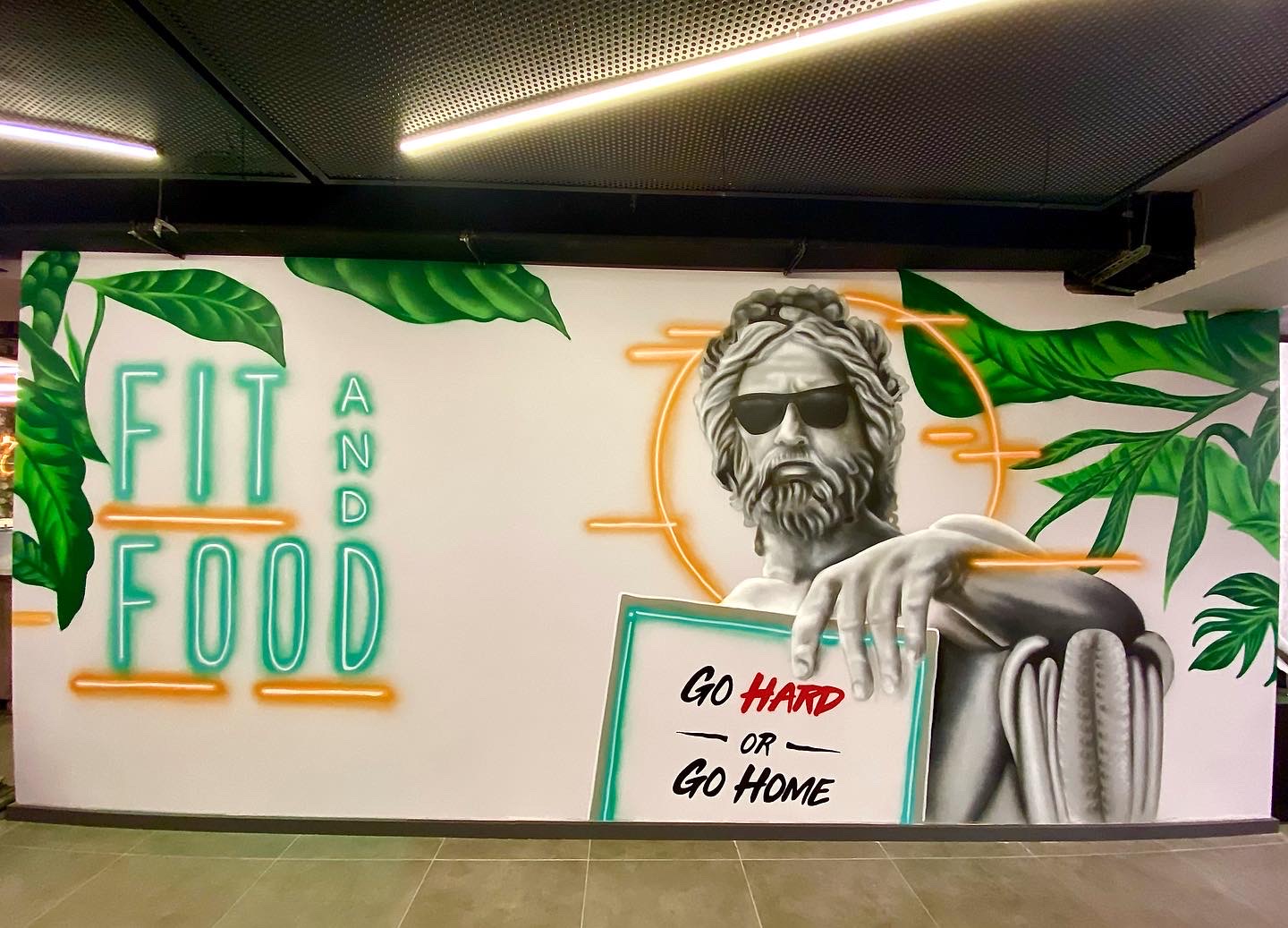
The process begins with discovery: the business, audience, architectural context and desired feeling. I then determine the visual direction, composition and color relationships. Depending on the project, the proposal may include a sketch or a digital placement mockup on a photograph of the actual wall.
Feedback should be gathered from all decision-makers at the same stage. A single consolidated revision list prevents contradictory changes and protects the schedule. Final approval should cover composition, placement, palette and major elements; small variations during hand painting remain part of the work’s character.
You can review selected projects in the mural and wall art portfolio.
6. Why is wall preparation so important?
The wall is part of the artwork. Dirt, dust, loose paint, cracks, damp, salt deposits or incompatible glossy coatings can shorten the mural’s life even when the color layer is excellent. The Canadian Conservation Institute identifies the support and moisture as central factors in outdoor mural longevity and recommends inspecting and preparing the wall carefully before painting.
The client and artist should agree in writing who will clean, repair, prime and make the surface ready. Structural water or damp problems should be corrected by the appropriate building professional before the mural begins. Painting over an active problem only hides it temporarily.
7. Which materials are used indoors and outdoors?
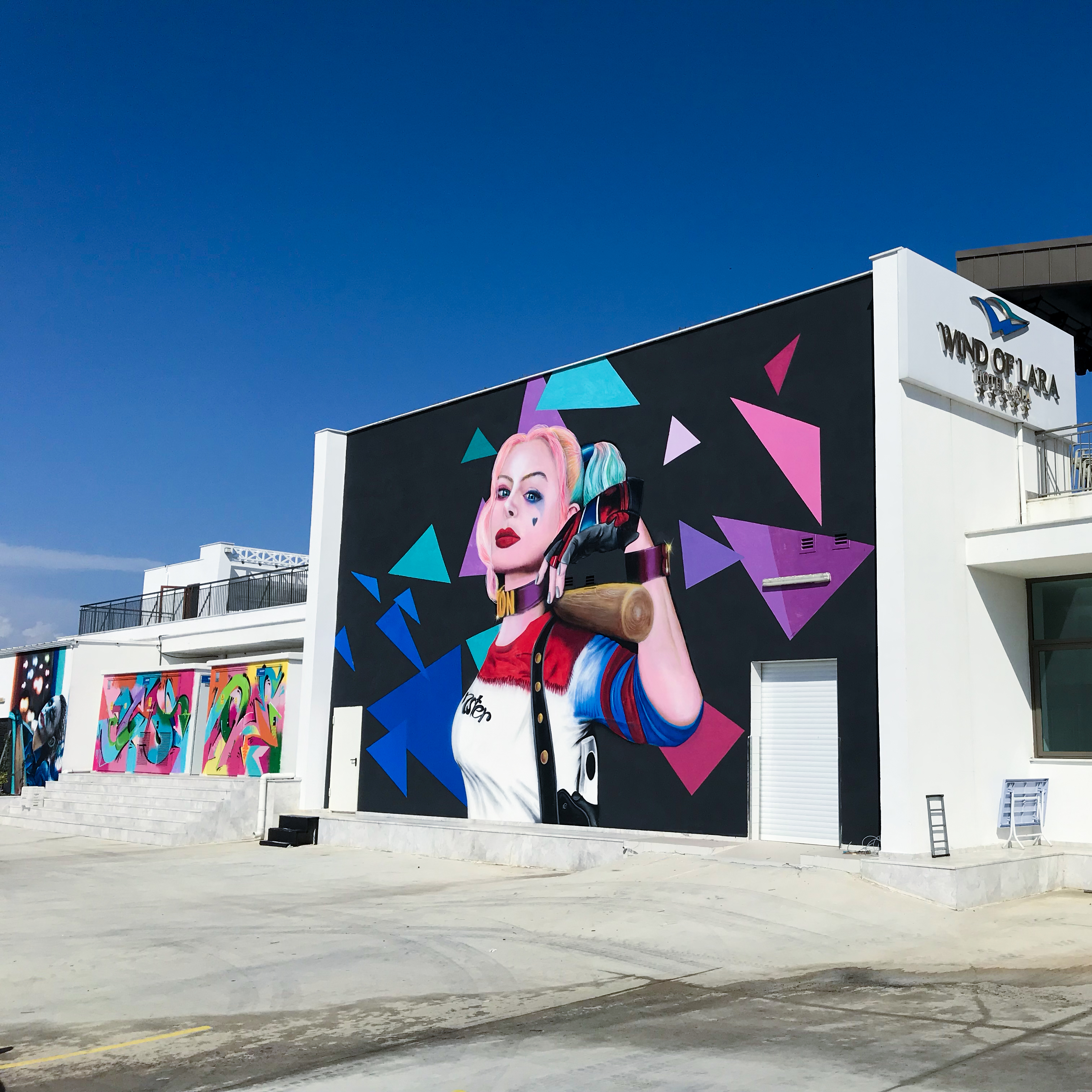
Material selection follows the surface and exposure. Interior and exterior projects may use professional acrylic systems, exterior paints, spray paint, airbrush materials and compatible primers or coatings in different combinations. Sun direction, humidity, rainfall, salt air, touching, cleaning routines and color choices all influence the specification.
One product is not automatically right for every wall. Conservation guidance recommends checking compatibility among the wall, primer, paint and any final coating, and recording the materials used. In Antalya’s bright sun and coastal conditions, this project-specific decision is especially important.
8. How long does a mural project take?
Duration includes more than painting days. Briefing, site review, concept development, revisions, surface preparation, access setup, application, drying and documentation all need space in the schedule. An interior feature wall may take a few working days; a large exterior façade or multi-wall hotel project may require a longer phased plan.
Weather can change an exterior schedule because temperature, wind, rain and humidity affect safe work and paint curing. If the business must remain open, the work can sometimes be divided into zones or planned around quieter hours. These conditions should be discussed before a deadline is promised.
9. Are permissions or safety planning required?
For interior work, obtain approval from the property owner or authorized management. Exterior façades, shared buildings, protected structures, signs or images that function as advertising may involve building management, property-owner or municipal requirements. Rules depend on the exact address and project, so the client should verify current permissions with the relevant authority before application. This guide is not legal advice.
Safety planning changes with scale. High walls may require certified scaffolding or a lift, a controlled work zone and suitable insurance or site procedures. Public circulation, emergency routes and neighboring businesses must remain safe. These items belong in the project plan, not as last-minute additions.
10. How long will a mural last and how is it maintained?
No artist can promise one lifespan for every environment. Longevity depends on the wall, moisture, ultraviolet exposure, paint compatibility, physical contact, cleaning, pollution and maintenance. Documentation matters: keep the design files, completion photographs, paint names and color references so future inspection or retouching is easier.
Clean only with a method compatible with the surface and coating. Do not treat every mark with aggressive chemicals. Inspect exterior work periodically for water entry, cracks or peeling; correcting the building issue early can prevent wider damage to the artwork.
From Antalya to projects across Turkey
My portfolio includes work for hotels, businesses, studios and branded spaces in different scales. Projects outside Antalya—including Istanbul and other cities—are planned according to site review, design, surface preparation, travel and application requirements. The aim is not to repeat a catalogue image, but to create a work that belongs to that architecture.
To request a proposal, send wall photographs, approximate dimensions, city, indoor/outdoor information, desired date and a short concept or brand brief. Explore the portfolio or start a project conversation.