12 Mural Ideas for Hotels, Restaurants and Cafés
Twelve practical mural ideas for hotels, restaurants and cafés, with advice on placement, brand fit, photo spots and project briefing.

A wall painting in a hotel, restaurant or café should do more than fill an empty surface. The right mural can introduce the character of the venue, guide attention, create a memorable photo point and give guests a story to associate with the place. The strongest result begins with the wall, the audience and the brand—not with a generic image selected at random.
I am Asil Argun. I have created murals, graffiti, paintings and tattoo work since 2010. In this guide I have gathered twelve practical mural directions for hospitality businesses in Antalya and across Turkey. Each idea can be adapted to the architecture, light, customer profile and visual language of the venue.
1. A statement mural for the entrance or lobby
The entrance is where guests form their first visual impression. A large composition with a clear focal point works well behind reception, opposite the main door or at the end of the arrival axis. The design should remain legible from the distance at which it will first be seen. In a busy lobby, one strong image is often more effective than many small details.
2. A local story without the obvious clichés
Antalya offers many references beyond a literal beach scene: Mediterranean plants, wind, stone textures, archaeological forms, neighbourhood details and the changing colours of the coast. These can become an original visual vocabulary. A local narrative is most convincing when it is interpreted through the identity of the property rather than copied as a tourist symbol.
3. A brand world instead of an oversized logo
A logo can be part of a mural, but it does not need to dominate the wall. Brand colours, shapes, tone of voice and the feeling promised to the guest can be translated into a complete visual world. This approach makes the work feel like art while keeping it unmistakably connected to the business.
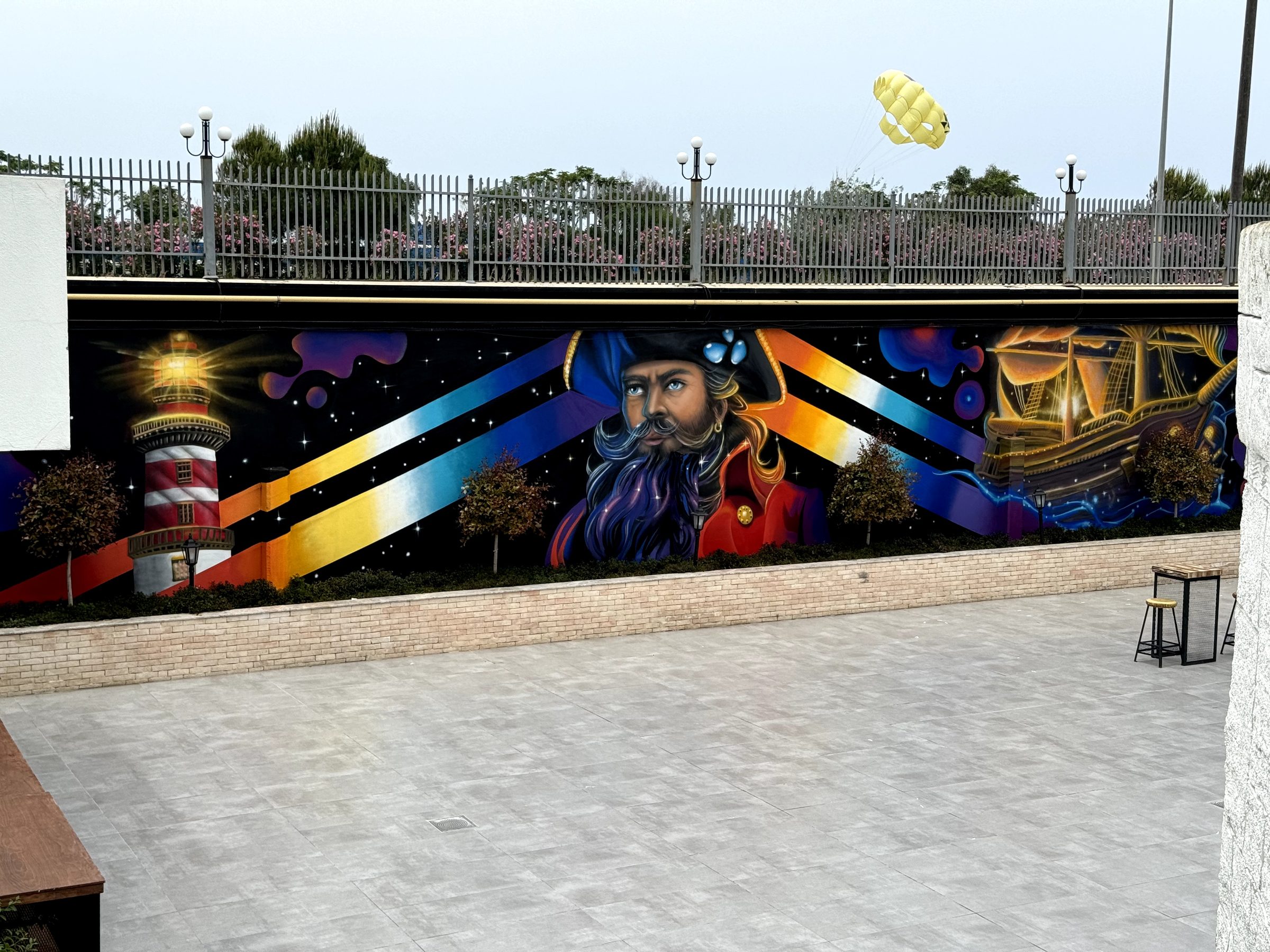
4. A restaurant mural built around ingredients and food culture
For restaurants, the most useful starting point may be the menu, production method or culinary geography. Herbs, ingredients, hands, fire, table rituals or abstracted flavours can create a richer story than a direct photograph of a dish. The palette should also be tested against the existing lighting, furniture and plate presentation.
5. A deliberately designed photo spot
A photo wall needs more than a striking image. There should be enough standing distance, flattering light, a clear camera angle and no service equipment blocking the frame. The composition can leave purposeful negative space for the guest. Research on hospitality imagery and user-generated content suggests that visual presentation can affect attention and visit intentions, but no mural can guarantee social-media reach or sales on its own.
6. A corridor that becomes a visual journey
Long corridors are ideal for a sequence rather than one isolated scene. A story can unfold from one section to the next, while repeated colours or forms hold the composition together. This is especially useful in hotels, where floor transitions and wayfinding can become part of the artistic experience.
7. A different identity for each floor or guest zone
A property with several floors can use related murals as a family: the same visual language with different plants, animals, symbols or colour temperatures. Guests gain memorable reference points, while the building keeps a consistent identity. The concept should be planned as a system before the first wall is painted.
8. A dramatic bar or evening-space mural
Bars and late-night venues can support deeper contrast, metallic accents, ultraviolet details or compositions designed for low light. The mural must be evaluated under the actual evening lighting—not only in daylight. Reflections, spotlights and moving shadows can become deliberate parts of the work.
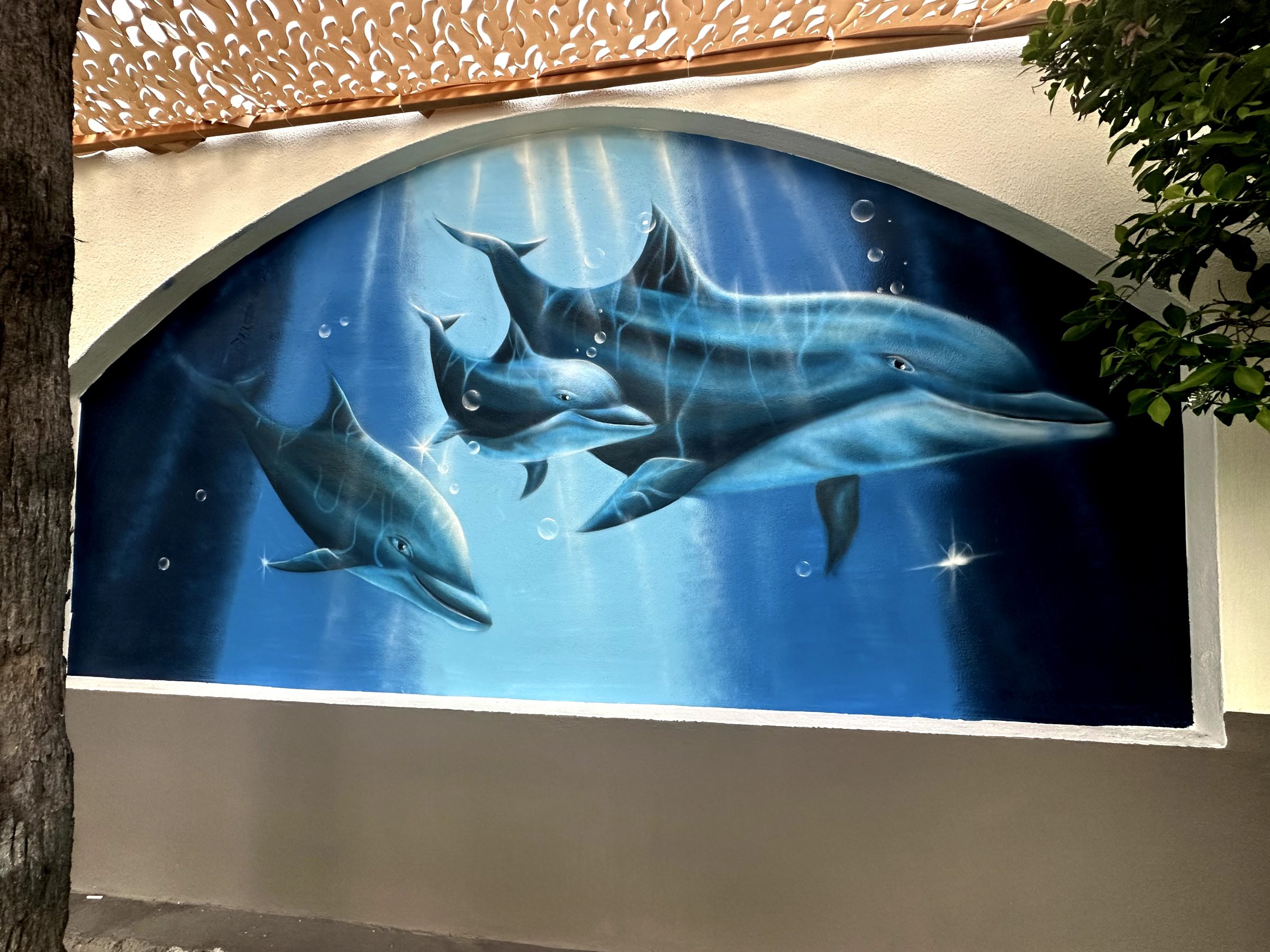
9. A family or children's area with its own story
A children's zone can be imaginative without becoming visually disconnected from the rest of the venue. Characters, maps, hidden details and interactive prompts reward repeated viewing. The height of the focal elements should be considered from a child's eye level, and materials must suit the cleaning and durability needs of the space.
10. Calm or energy for wellness and fitness areas
A spa may call for rhythm, breathing space and soft transitions; a gym may need speed, direction and stronger contrast. Instead of choosing a predictable motif, define the desired emotional state first. The same brand can use different levels of intensity while retaining common colours and forms.
11. An exterior mural that acts as a landmark
A visible exterior wall can help a venue become easier to recognise from the street. The design must work at architectural scale and from realistic viewing distances. Sun, rain, surface condition, access equipment and protective coating all influence the material plan. Exterior murals require a proper site assessment before a firm proposal.
12. Seasonal, phased or changeable mural zones
Not every project needs to cover the entire property at once. A concept can begin with one high-impact wall and expand later. Some areas can also be designed around seasonal overlays or replaceable panels. Phasing is useful when a business must remain open, provided the visual system is established from the beginning.
How to choose the right mural idea
Start with five questions: Who uses the space? From where will they first see the wall? What should they feel? How does the idea belong to this brand? What will the wall face in daily operation? The answer should balance originality with the architecture. Artwork placement matters: emerging hospitality research indicates that where and how art is encountered can influence the guest experience, so scale and viewpoint deserve as much attention as the illustration itself.
- Audience: families, local regulars, international guests or a specialist community.
- Viewpoint: the real camera and walking distances, not only a straight-on mock-up.
- Light: daylight, evening light and reflections on the painted surface.
- Brand fit: colours and forms that can live with the interior for years.
- Maintenance: touch, cleaning, sunlight and weather exposure.
What to send when requesting a mural proposal
Send clear photographs of the whole wall and its surroundings, approximate width and height, city, indoor or outdoor location, desired completion date, operating hours and any brand or architectural files. Add a few words about the atmosphere you want. This information makes the first conversation more accurate; a site visit may still be necessary.
For the complete planning, surface preparation and production process, read the commercial mural commissioning guide. You can also view selected mural projects or request a project consultation.
Frequently asked questions
Can a venue remain open while a mural is painted?
Often yes. The work can sometimes be divided into zones or scheduled outside peak hours. Access, ventilation, noise, safety and drying time are reviewed before the plan is confirmed.
How long does a hospitality mural take?
Duration depends on wall size, detail, height, surface preparation, access and site conditions. Reliable timing follows an approved design and wall assessment.
Can the mural match an existing interior?
Yes. Photographs, material samples, lighting information and brand files help build a palette and composition that belong to the existing space.
Do you work outside Antalya?
Yes. Projects elsewhere in Turkey can be evaluated according to scale, schedule, access and travel requirements.
Research referenced in this guide
- Research on art engagement in luxury hotel experiences
- Research on artwork placement in restaurant environments
- Research on hospitality imagery, user-generated content and visit intention
Have a wall in mind? Send its photographs and measurements through the project form. I will evaluate the surface, concept and application conditions before preparing the next step.