How Is a Mural Made? Wall Painting Project Process
How a professional mural is made: briefing, wall survey, surface preparation, design, pricing, application, handover and maintenance.

A successful mural begins long before the first brushstroke. The wall, the architecture, the brand, viewing distance, light, access and operating schedule all shape the result. This guide explains the complete wall painting process—from the first brief and site survey to design approval, application and handover.
A mural is a site-specific artwork
A mural is not simply an image enlarged onto a wall. It has to belong to a particular surface and space. The same composition may behave very differently in a hotel lobby, restaurant terrace, office corridor or exterior façade. Doorways, columns, furniture, signs, shadows and the movement of visitors become part of the composition.
My work in painting, graffiti, murals and tattooing since 2010 informs this approach: I treat the wall as both an architectural surface and a large-scale canvas.
1. Defining the purpose and brief
The first question is not “Which colours?” but “What should this wall do?” A commercial mural may need to:
- make a venue recognisable from the street;
- express a brand story without looking like an oversized advertisement;
- create a photographable focal point;
- guide visitors through a large space;
- soften an empty architectural surface;
- connect a hotel or restaurant with its location and culture.
A clear goal helps decide the style, density, palette and viewing distance. If you are still exploring the concept, the hotel and restaurant mural ideas guide offers useful starting points.
2. What to send for an initial mural quote
A useful first message contains more than a single close-up photograph. Send:
- the city and full project location;
- wall width and height;
- one straight photograph, one wide photograph showing the room, and detail shots;
- whether the wall is interior or exterior;
- known information about paint, plaster, moisture or damage;
- access conditions and approximate working height;
- the desired completion date and the venue's operating hours;
- your visual direction, brand guide, reference images and essential colours.
This information supports an initial assessment. Large, exterior, damaged or technically complex surfaces may still require an on-site survey.
3. Site survey and wall assessment
During a survey, I evaluate dimensions, viewing angles, natural and artificial light, surface condition, obstacles, pedestrian flow and working access. For an exterior wall, sun direction, prevailing weather and drainage also matter. For an active business, we plan how equipment, materials and safety zones will fit without disrupting customers more than necessary.
Any required scaffold, lift, permit, traffic arrangement or building approval should be identified before the application date. These items can affect both price and schedule.
4. Surface preparation: the foundation of durability
Even an excellent painting system cannot compensate for a loose, wet or contaminated wall. The surface should be sound, dry and compatible with the selected primer and paint. Dust, grease, mould, chalking, peeling paint and loose plaster may prevent proper adhesion.
Repairs, moisture problems and construction defects must be resolved before artistic work begins. Depending on the agreement, this preparation may be handled by the property contractor or included as a separate part of the mural project. Paint manufacturer Sherwin-Williams emphasises that preparation must match the substrate and environment.
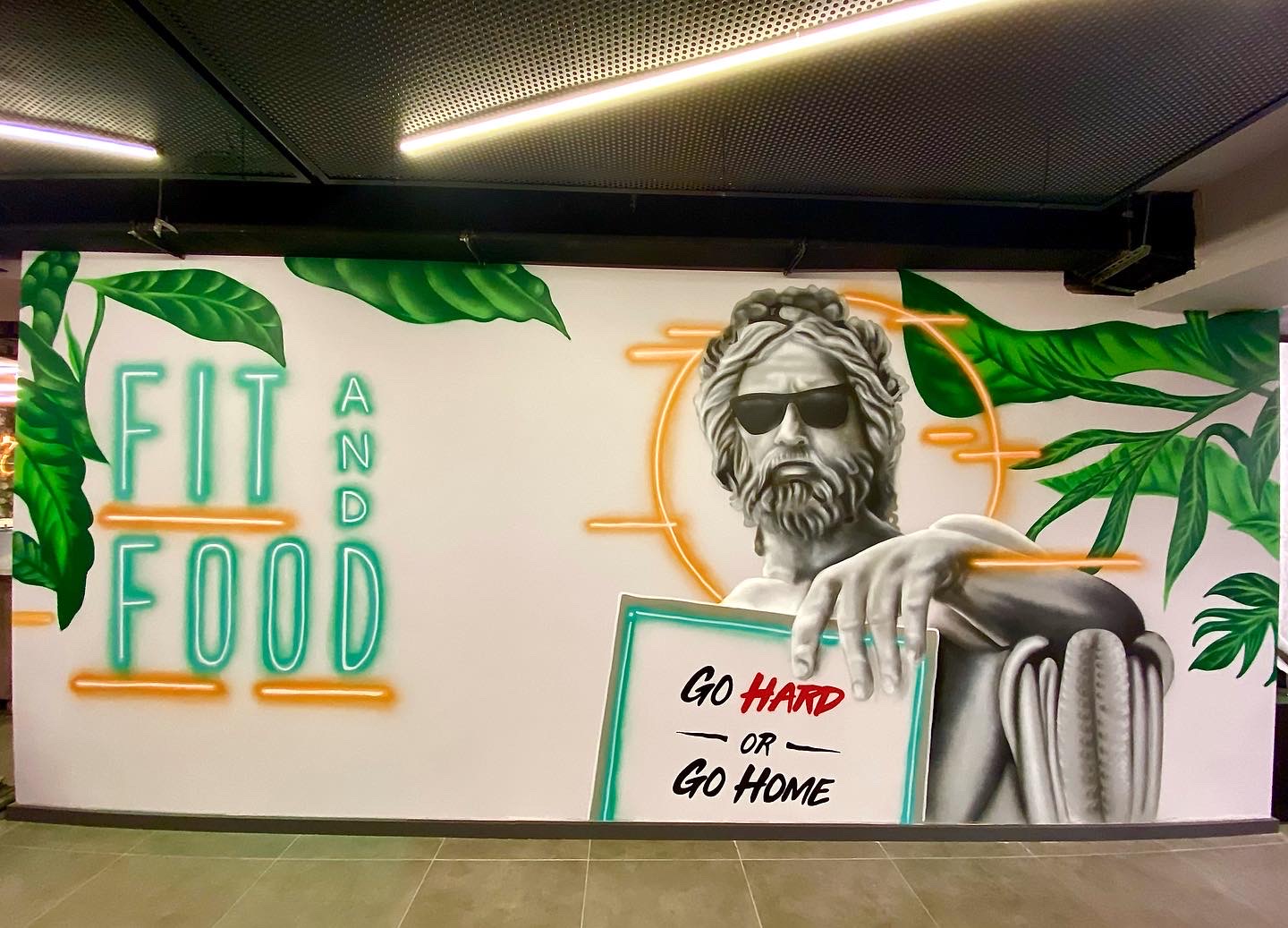
5. Concept development and composition
After the brief and wall information are clear, I develop the visual concept. The process may include reference research, sketches, colour studies and a scaled mock-up on the wall photograph. The goal is to see how the design meets corners, furniture, doors, lighting and signage before application.
A strong mural should remain interesting both from a distance and up close. Large masses establish the first impression; secondary forms create rhythm; selected details reward closer viewing.
6. Design approval and revision boundaries
The approved concept becomes the basis of the project. Before work begins, the scope should state what is fixed: composition, palette, approximate detail level, wall dimensions and included revision rounds. This protects both the client and the artist.
A digital mock-up is a planning tool, not a promise that every screen colour will look identical on a physical wall. Light, wall texture, surrounding colours and material finish influence the final appearance.
7. How mural cost is calculated
Square metres are important but never the only factor. Price can also change with design complexity, surface preparation, number of colours, working height, access equipment, location, travel, exterior conditions, deadline and whether the venue must remain operational.
A detailed 20 m² composition may require more work than a graphic 40 m² design. For a complete explanation, read the mural pricing and cost guide.
8. Planning the schedule around the venue
The project timeline includes more than painting days. Briefing, survey, design, revision, surface preparation, material supply, application, drying and handover all need time. Exterior work also requires a weather window.
For hotels, restaurants and retail spaces, the work can sometimes be divided into zones or scheduled during quiet hours. The practical plan depends on noise, ventilation, access equipment, drying time and customer circulation. These conditions should be agreed before arrival.
9. Transferring the design to the wall
Depending on scale and style, the approved drawing may be transferred through freehand construction, a measured grid, projection, pouncing, stencils or a combination of methods. The transfer method is not the artistic result; it is a tool for controlling proportion on a large surface.
Curved walls, corners and uneven textures may require adjustments during application. A site-specific mural must remain responsive to the real architecture.
10. Painting and building the image
Application usually proceeds from large shapes and background relationships toward secondary forms, outlines, modelling and final details. Brushes, rollers, spray paint or compatible combinations may be used according to the visual language and surface.
Materials are chosen for the substrate and exposure conditions—not simply because one product is fashionable. Interior and exterior projects may require different primers, pigments and coating systems.
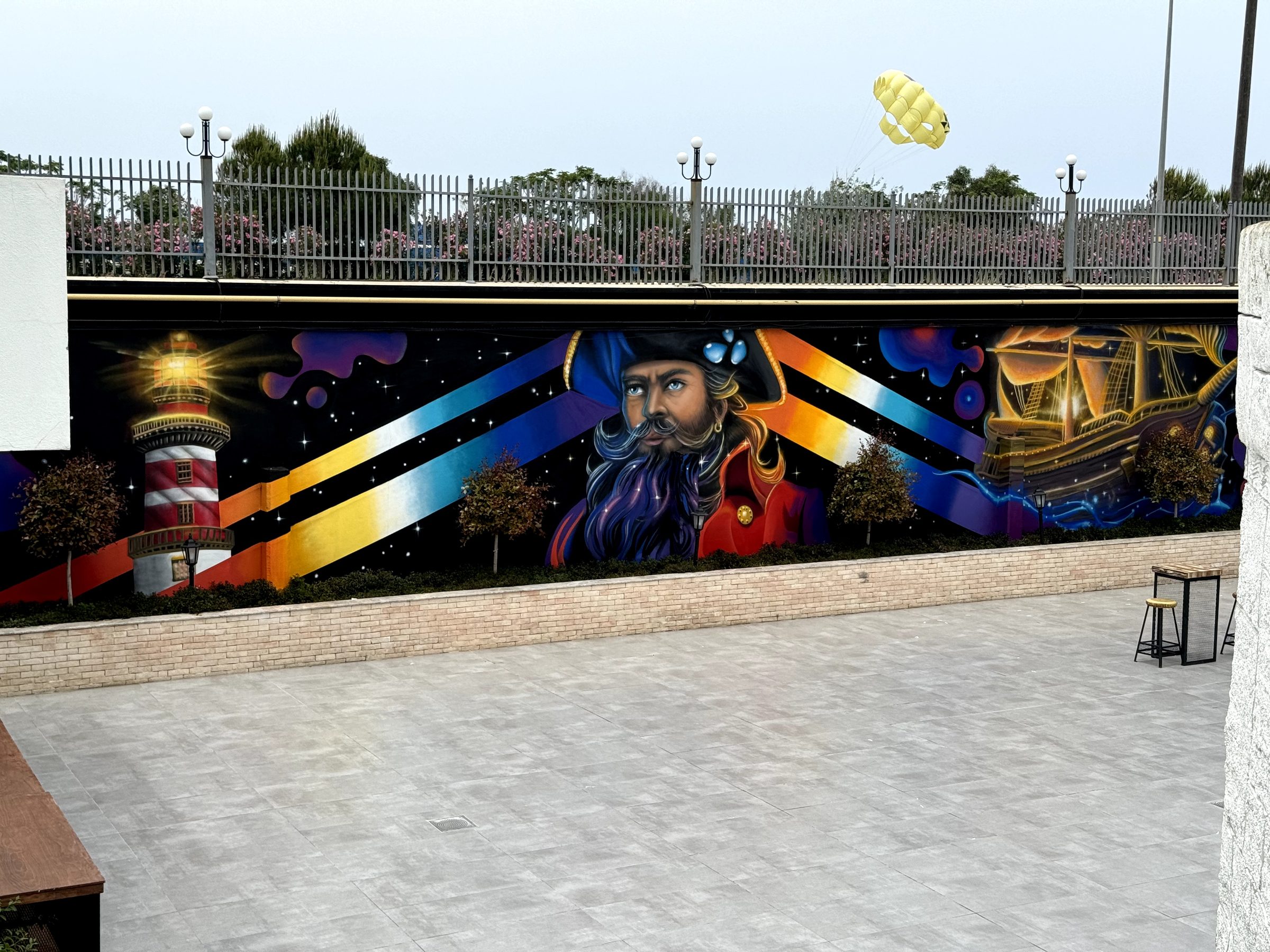
11. Is a protective coating always necessary?
No single finishing system suits every mural. A compatible clear coating can be useful in some high-contact or exterior conditions, while an unnecessary or incompatible layer can alter colour, sheen, breathability or future maintenance. The decision depends on the paint system, wall, exposure and maintenance plan.
For outdoor projects, long-term thinking should begin during design and material selection rather than being reduced to “add varnish at the end.” The Canadian Conservation Institute's outdoor mural guidance also treats substrate, environment, materials and maintenance as one system.
12. Handover, photography and maintenance
At completion, the work is reviewed from key viewing points and photographed. The handover can record the products used, colour references where relevant, cleaning limitations and recommendations for future inspection.
A mural should be checked periodically for moisture, structural cracks, impact damage, vandalism or coating failure. Early intervention is usually easier than waiting for a small problem to spread.
Antalya climate and exterior murals
Strong sun, seasonal rain, coastal conditions and hot working temperatures make timing and material compatibility important in Antalya. Exterior application should not begin on a wet wall or in unsuitable weather. Shade, drying conditions and the wall's orientation are considered when scheduling the work.
Projects outside Antalya can also be planned. Travel, accommodation, access and material logistics are included transparently in the scope.
Frequently asked questions
How long does a mural take?
It depends on size, detail, height, surface and weather. A modest interior wall may take a few working days; a large façade can require a longer design, preparation and application programme. The schedule is estimated after the wall and concept are assessed.
Does the wall have to be white?
Not necessarily. What matters is a sound, compatible and intentionally prepared base. The required ground colour is chosen according to the composition and coating system.
Can you include a logo or brand colours?
Yes. Brand elements can be integrated directly or interpreted more subtly. Supplying vector logos and current colour references helps the design process.
Can the business remain open during painting?
Sometimes. It depends on access equipment, ventilation, customer circulation and safety. Zoning or off-hour work may be possible, but it must be planned before the project starts.
Can an old mural be renewed or painted over?
Often yes, after checking adhesion, surface damage, moisture and compatibility. The existing work may need cleaning, repair, isolation or priming before a new image is applied.
Start a mural project with Asil Argun
Explore completed work in the mural portfolio and review the commercial mural guide. To request a proposal, use the project appointment form and send the location, dimensions, photographs, deadline and visual direction. Projects can be discussed in Turkish or English.